IMG blog
  • Facebook
  • Instagram
  • Vimeo
  • YouTube
  • RSS
  • Blog Home
  • IMG Home
  • Mt. Rainier
    • Mt. Rainier Climbs Schedule
    • Winter Ski & Avalanche Training
  • Expeditions
    • IMG Expeditions Filter
    • Seven Summits
    • Trip Reports
    • Client Comments
  • Newsletter Sign-up
  • Contact Us

5 1/2 Tips From An Atypical Mountaineer

November 15, 2011

In the spirit of last week’s “From A Guide’s Perspective” features, longtime friend of IMG, Viki Tracey, took a few minutes to give us a few pointers from her point of view.

‘5½ Tips’ From An Atypical Mountaineer
By Viki Tracey
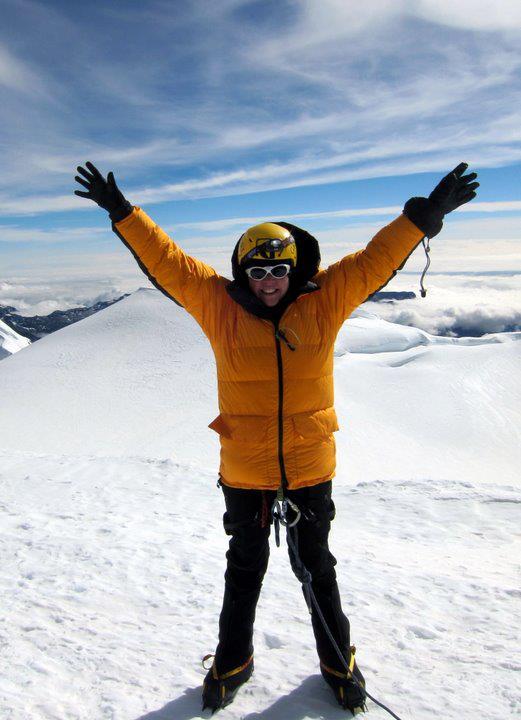
Viki on the summit of Illimani in Bolivia.

I like to think that I am a somewhat atypical mountaineer. Not really naturally blessed with good balance, a strong head for heights or even much in the way of coordination, I am, frankly, a Guides’ nightmare. However, not one to let physiology hold me back, 5½ years ago I decided I wanted to climb Kilimanjaro. At the time, I weighed about 215lbs (I am 5’6”) and getting out of a car was about the most challenging part of my ‘exercise regimen’. Undaunted, I lost weight, did some exercise and summitted Kili. And, in so doing, found a passion for the mountains and for climbing that has brought a better ‘balance’, good health and some wonderful friends into my life.

I am by no means an expert, but in recognition of those 5½ years, here are my 5½ tips for having fun in the mountains…

  1. Take the step. If you’re like me, you may be nervous about getting started or committing to that next step up. Use your resources and pick up the phone… the crew at IMG have never led me wrong, and I think I am coming up on trip number 9.
  2. Train smart, be practical. It’s no surprise that the more you train, the more fun (and safe) your climb will be. But just because you don’t live in the mountains, doesn’t mean you can’t be ready. I dragged an SUV tyre [read tire – Viki is from London] around Houston and carried a weighted pack around London to get ready for Denali and Bolivia. In my experience, optimizing power to weight ratio, core strength and endurance training is the key to success. If you can get into the hills to train, that’s great, but if you can’t, you can still come well prepared.
  3. Self reliance. All of my trips have been guided (most with IMG). It’s impossible to overstate how wonderful the Guides are and how well they will take care of you. However, I care a lot about taking personal responsibility for being a strong part of the team. For me, this means being able to keep my wits about me even when exhausted: eat, drink and put on warm clothes at every break. I actually ‘train’ for this by doing mental arithmetic when I am walking or at the gym (did I mention I am a little odd?!).
  4. Keep it light. Less stuff equals less work. I plan ahead and buy the lightest stuff that I can. 30 minutes on the internet nerding out about a piece of climbing kit is a great de-stresser (for me) after far too many hours in the office. Follow the IMG gear lists. You don’t need more.
  5. Look up! Remember to make time at the breaks to look around, take in that exquisite view and snap a photo to share with your new found climbing pals and the gang back at home.

    5 ½.    One for the gals. Pee funnel. Get to grips with it. Mastering this means a lot less time spent evaluating your need to go against the (internationally recognised?) cold arse to desperation rating scale… and, in all seriousness, in my case, means I stay better hydrated (I drink more liquid because I am not so worried about holding up the group).

I hope our paths will cross in the mountains one day. Happy climbing!

Viki Tracey
Read More

Goodbye Mexico

November 13, 2011

Goodbye Mexico. (Photo by Ken Curchin)

Today’s fly day.  Gang got into Mexico City about midday on Saturday and headed straight out for a bit of sightseeing and last minute shopping.  Hard to get a ride home from the airport without a few gifts in hand.  And, as always, everyone got together for dinner and a chance to make a few toasts and say thanks to one another for being great, supportive teammates and for a job well-done.

To the guides – George Dunn, Mike Haft and Fernando Posada, way to keep everyone safe, help them be as successful as possible and to make sure people had a good time and learned a few things along the way.  And to all of our climbers – thanks for being such positive, competent and contributing team members.  And, of course, to Mexico – for supplying a great couple of objectives, wonderful people and some very good weather.  It all has to come together but it’s sure nice when it does.

Mexico trips are great in that flights aren’t too long and time zone changes are minimal.  Makes it easy to do this trip in one work week and get able to hit the ground running at work on Monday morning.

Next Mexico blog dispatches begin in early December when a 3 member private team head down with IMG guide, Greg Vernovage, to get a little sun and cerveza.

Phil Ershler

Read More

From A Guide’s Perspective: Four Keys To A Successful Climb

November 11, 2011

Part 5 of our week long series “From A Guide’s Perspective”, IMG Guide Max Bunce talks about some key components to any successful outdoor adventure.

4 Keys to a Successful Climb
By Max Bunce

Max Bunce

1. Hydrate, Hydrate, Hydrate

Many times in my life I have failed on a climb almost certainly because I was dehydrated. Hydrating comes in three phases. Pre-hydrating, hydrating during the climb and post-hydrating. Pre-hydrating starts the night before, usually tapering down at night so that I am not up all night going to the bathroom. In the morning I start back up again with at least a liter before the climb starts. During a climb, I usually drink no more that 2 liters of water, keeping in mind that water is heavy and drinking takes time. You might be dehydrated by the end of the day, but something’s gotta give! Hydration bladders are nice because you can drink water more continuously but they don’t work in all situations. The number one reason not to use a bladder in the mountains is that they freeze. The second reason is that they seem to leak more often than a regular water bottle. During a classic rock climb called the Petit Grepon in Rocky Mountain National Park our party decided to bring most of our water in one 100 oz. bladder. Two pitches up, I felt a wetness on my back and to my dismay I found that our water drained into my backpack because the hose got pulled off. We climbed the rest of the day with no water causing us to move slower and make less than ideal decisions. We made it out safely but that little mistake could have cost us! Post climb is also a very important time to hydrate. Downing a liter in the 2 hours after the climb increases recovery and may make the difference for the next days climb. Remember beer is not a substitute for water but if you have to, drink light beer!

2. Eat!

Tell me if this sounds familiar? You have been hiking all day with friends or a loved one and sometime later in the day you get in a fight about the most trivial thing. This is almost certainly due to a lack of blood glucose. It happens to everyone and it is caused by burning through all your food energy. Simple solution, eat more! The problem is many people aren’t hungry so they don’t eat. As a guide this is one of our “red flags”. It’s a complete no brainer, if someone is not eating and they are burning calories, eventually they will crash. A good rule of thumb is to eat at every break. One common question is what to eat? The short answer is whatever you like best. I would go with foods that you eat on a regular basis, things you know that you like. Here, weight is less important than finding quality food that you like. Finally eating lots of high sugar food right after a climb is a good idea. It has been shown in many studies that eating or drinking so called “fast” carbohydrates immediately after exercise helps recovery. This is when I go to my favorite candy, sour patch kids.

3. Pace Yourself.

Pace often contributes to whether a climb is successful or not. Going too slow can cause a party to be out for too long and eventually either runout of energy or daylight. Going too fast can cause you to go “anaerobic” and burnout fast. Finding the happy medium is one of the hardest skills for a climber to master. In my experience folks seem to start out too fast and burn themselves out. Keep in mind that if you are doing a 3 day climb you need to keep a pace for three days not just one. One example of this is watching young, fit, independent climbers on Rainier run up to Muir on the first day, only to hit the wall on summit day and have all the guided teams pass them on the way to the summit.

4. Efficient Layering

Layering can be tricky. During a typical climb I am both extremely hot and very cold in the same day. The key to efficient layering is to pay attention to your surroundings so that you can “forecast” the weather for the next section of the climb. Let’s look at a few examples: 1. It has been bitterly cold before the sun comes up but you notice that there is no wind or clouds, obviously we would want to dress lighter leaving a rest break if the sun is about to hit you. 2. You have been climbing in a protected couloir and you are about to hit the ridge, you notice a plume of snow coming off the ridge due to wind. The smart move would be to layer up before you get to the ridge so that you don’t waste precious energy trying to layer up in the wind and cold. 3. Finally, on your descent you notice the sun just went down and it is getting colder. It would be wise to layer up right away before you get cold, saving yourself from getting cold in the first place. Keep in mind that from an energy standpoint it is a lot easier to stay warm than to warm yourself back up.


Read More

Mexico Team Summits Orizaba

November 11, 2011

The final steps to the summit of Orizaba. (Photo by Ken Curchin)

Two mountains and now two summits.  IMG partner, Georg Dunn, called from the summit of Orizaba at 7 am.  He had just finished shaking hands with all his team mates.  One climber stayed in Tlachichuca to take care of a respiratory issue but all other members began the climb this morning and all reached the summit.  We’re very pleased and proud.  What a great example of all climbers coming prepared, taking good care of themselves during the trip and then keeping their eye on the prize.  There will be 8 very tired but very excited climbers having dinner with the Reyes family tonight in Tlachichuca.

Well done, team.

Phil Ershler

Read More

From A Guide’s Perspective: Tricks Of The Trade

November 10, 2011

Part 4 of our week long series “From A Guide’s Perspective”, IMG Guide Greg Vernovage lays out a few simple but effective tricks of the trade.

Greg Vernovage

Tricks Of The Trade
By Greg Vernovage

I have been around a lot of guides over the years and what I’ve noticed is that we all have some things we do that help us keep our sanity and allow us to be more a little more comfortable in what can be an uncomfortable environment.  I’m no different, my tricks tend to focus on comfort, speed (read efficiency) and warmth.  As always, these ideas may not work for everyone but with enough time in the mountains, you’ll come up with some of your own.

My first recommendation to anybody is always based on food and water. We all know that we need to eat and drink at every break even if we’re not be hungry. A simple trick is to store your food and water in the same place in your pack every time you climb so it’s easy to find at every break. Often times I’ll put a snack in my pants pocket or the pockets of my puffy jacket so they’re easy to access at the breaks, and a touch easier to eat since they won’t be as frozen as some of your other food buried in your pack.

Another simple trick is to keep some food and water near you at night, sip on water after you go to the bathroom (hint: don’t confuse your water bottle and pee bottle) and have a few snacks handy as well.  You may wake up in the middle of the night hungry; if you’re hungry – eat!  Keep your stuff sack and water next to your at night so you won’t bother your tent mate as you rummage through your pack that’s conveniently outside the tent.  Remember, bring your favorite foods, if you don’t like something at sea level, you won’t eat it up there. Swedish Fish!

And a big one for me; change those socks!  After you have rolled into camp, worked hard all day and dug in, take a minute and put on a fresh pair of dry socks.  We rely on those feet so it’s in our best interest to take care of them.  You will feel refreshed and a little lighter on your feet.  You can put the socks you have been wearing all day in you jacket near your core and they will dry out for the morning.  They might stink a little but at least you will be comfortable.

And lastly, stay warm in camp. It is much easier to stay warm than it is to get warm. Put that extra layer on when you get to camp.  Keep stokin that fire with food and water and stay dry.

It’s the simple things.

Greg Vernovage

Read More

Ama Dablam Team Heading Home

November 10, 2011

Ama Dablam taken from Pumori Camp 1. (Photo by Eric Simonson)

This is Justin Merle writing from Kathmandu, where the Ama Dablam expedition is wrapping up.  Roger got on a plane last night, and Doug and Billy are headed home today.  Mark and Sierra have another day here, and Peter and I will stick around for a couple more days to tie up loose ends and do some organizing.

The last days of the trip went smoothly.  It was great to get back to our comfortable BC after the summit day. We were fairly tired, but the good cooking of Jor Bahudur Rai gave us some energy.  The next morning we finished up with some packing and had a short day walking down to Pangboche, the town where a some of our climbing Sherpas live.  That evening and the next morning, we were fortunate to spend some time visiting Ang Passang’s and Kami’s houses, and to meet some of their family.

We spent the next couple days walking to Namche Bazaar, then to Lukla.  Things went off without a hitch, and we were able to fly out to Kathmandu the following day.  I saw some folks flying out just before us who’d been stuck in Lukla with the bad weather, waiting to fly out for a week.  I guess we timed it right!

Personally, I had a wonderful time trekking again to Everest Basecamp and climbing on Lobuche and Ama Dablam.  Our group was fantastic, and it’s always a pleasure to work with our sherpa staff.  Thanks for a great one!

Justin Merle

Read More

A Slice Of Pizza & Some Shuteye

November 10, 2011

Orizaba (Photo by Phil Ershler)


After a successful summit on Ixta, the team “beat feet” off that mountain, jumped into the vehicles and headed straight to the colonial city of Puebla.  It’s a big city at over 2 million but has a much smaller feel.  We stay right off the zocalo, the town square.  Hotel check in, showers, clean clothes and then it was pizza outside at Vittorio’s, right alongside the zocalo.  A nightcap and bed followed shortly thereafter.

Heading for the village of Tlachichuca with lunch there and then the infamous 4-wheel drive up to the Piedra Grande hut at around 14,000 ft.  Summit #2 tomorrow morning.

Phil Ershler

Read More

From A Guide’s Perspective: Lighten Up

November 9, 2011

Part 3 of our week long series “From A Guide’s Perspective”, IMG Guide Austin Shannon talks about a few simple ways to lighten up your overflowing backpack.

Lighten Up!
By Austin Shannon

Austin Shannon

Ok, ok, I know how much we all like to research and buy our climbing gear, but for some, the simple act of acquiring all of the necessary gear can be one of the more stressful parts of your trip.  Hopefully I can help you figure out a strategy on how to tackle this objective and, at the same time, lighten up that pack!

It seems obvious but the best advice is: buy it once, buy it right and buy it light!  With this in mind I’ll narrow what I’m shopping for down to a few similar items then I’ll check out the weight of each item. From there, I’ll do the math and see if those extra ounces are worth  weight and/or money. Keep in mind that some of the bells and whistles on a lot of the gear are exactly that, bells and whistles to help get it off the shelves and in your closet!  One adage we all live by in the mountains is: Ounces make pounds and pounds make pain!

Some helpful hints:

  1. Make a list.  Before you start this process remember, “just in case” weighs a lot and adds up quick!  We are in the mountains to enjoy the adventure, not to be loaded down with crazy nicknacks that we don’t actually need.  Stick to the list and make adjustments based on seasonal demands and weather forecasts, not “just in case”.
  2. Do more with less.  Don’t forget, your trip has an end.  Try to go with as little gear as possible.  Your body can survive on much less than you think.  You don’t need five different head layers.  Find gear and various layers that serve more than one purpose.  If something only has one job then don’t buy it.  For example,  puffy jackets  double as a pillows so that 4oz. inflatable pillow is 1/4lb you don’t need.  A long sleeve shirt can be turned into a short sleeve by simply pulling up your sleeves. You get the idea.
  3. Keep it simple.  When shopping for gear,  it’s easy to get lost in the new latest &greatest features. Just remember, the more features it has means there are more things that can break and the more it likely weighs.  A simple example of this is in backpacks -  we don’t need a extra sleeping bag compartment. The external and internal zipper and the added fabric add unnecessary weight to the pack and add 2 more zippers that can fail.

Some of these suggestions may seem obvious but we are often our own worst enemies with what ends up in our packs.  My last bit of advice would be to make notes after each one of your climbs: what did i use a lot? what did i not use at all? Over time you will develop a tried and true system that works for you!

[For some Rainier Specific suggestions see How Can I Lighten May Pack]

—

Up next for Austin:  Ski patrolling this winter at Crystal Mountain and heading to Aconcagua in February. 


Read More

Mexico Team Summits Ixta

November 9, 2011

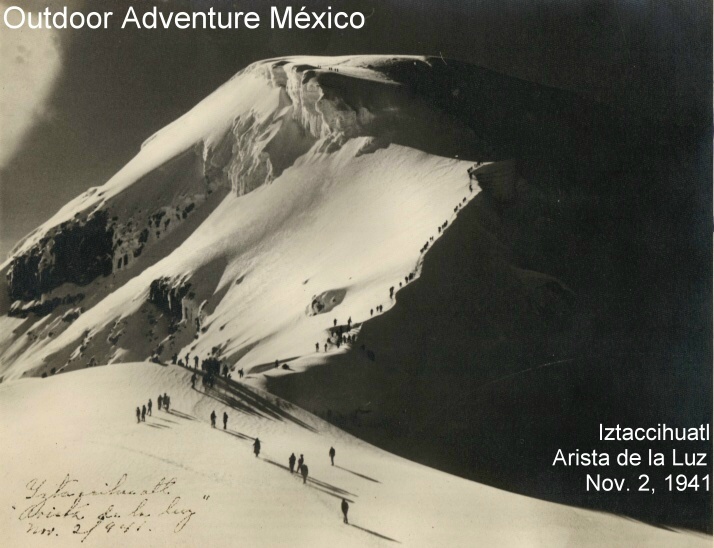
Postcard circa 1941 of Iztaccihuatl.

I always like starting a day with a call from one of our groups saying they just reached the summit of another peak somewhere in the world.  My partner, George Dunn, call in at 8 am Pacific time to let me know that his entire team, minus one climber, stood on the summit this morning.  A little cloudy and unsettled but good enough to climb safely.  George personally stayed behind to escort one of our members down when he began to exhibit signs of altitude problems.  This is the very reason you want a knowledgeable, experienced guide at the helm of a trip.  Catch a potential problem early and keep it from becoming a serious problem.

Our congratulations to all.  They’re heading down now and will try to get to the city of Puebla tonight for showers and a bed in the hotel.  Dinner will be a late one but not that hard to handle on a warm evening in Mexico after a good summit.

Orizaba is next.

Phil Ershler

Read More

From A Guide’s Perspective: Day To Day Expectations

November 8, 2011

Part 2 of our week long series “From A Guide’s Perspective”, IMG Guide Chris Meder describes a few things that can make or break a climb.

Daily Expectations & Your Process
By Chris Meder

Chris Meder

Mountaineering, like many challenging things we apply ourselves to in life, can bring some anxiety.  Not knowing what the route looks like, an uncertain weather forecast, and not being sure of our physical fitness can all contribute to an unproductive sense of nervousness.   As with most of these challenges, planning, preparation and knowledge can give you a hefty psychological advantage.  That’s why it’s good to have an idea of what you can expect day to day in the mountains.  Whether you’re just embarking on your mountaineering career with a first climb of Mt Rainier, or attempting a big peak in some remote location around the globe, the process of your day to day activities will be very similar.   Here are some things to get you started in developing a mental model of what to expect from a day in the mountains, just about anywhere.

At its most basic, your daily routine will look something like this.  Wake up reasonably early (dark and early for summit days), get dressed in clothing appropriate to the current weather, jumpstart the body with some breakfast, then attend to any camp chores before departing for the day.  Once you’re walking or climbing, your goal is to move as efficiently as possible, moving at a consistent pace.

You want to focus on taking care of yourself, conserving precious energy as you go.  This means stopping to eat and drink approximately every hour, even if you are not hungry.  You’re not eating to satisfy a current hunger, but rather to keep the fire going throughout the day so that the body continually has reserves to draw upon.  Stay ahead of the caloric and hydration curves.

Throughout the day, even while trying to move at a consistent pace, you will inevitably get hot or cold.  Thermal equilibrium in the mountains is a myth; it’s just something we need to accept and deal with.  The weather can change quickly, and the body’s heat output will do the same based on the terrain you’re traveling through, and how hard you’re working.  Be flexible and do your best to anticipate what layers to wear for each part of the day, given the current weather and your current temperature.   Your guide will help with this clothing selection, but spend some time at home becoming familiar with your layering system to aid in this process.  Eventually, you will come to know exactly what layers to wear for a particular part of the day.  No problem if you choose incorrectly, just make a mental note and adjust next time.  Your goal with all of this is to manage your body temperature effectively—not sweating profusely or shivering uncontrollably—which will in turn conserve energy.

IMG Camp On Bona (Photo by Mark Allen)

At the end of the traveling portion of the day, you’ll pull into camp.  It’s time to put on some warm clothes, probably that big puffy jacket you’ve been carrying.  Tasks you’ll want to attend to in the evening are establishing a solid camp (done as a group on IMG trips), drying out any wet clothes, and continuing to hydrate and eat.  After dinner and enjoying your surroundings for a bit, get to bed at a decent hour to rest up.  The more time you can spend lying down, the more opportunity the body has to recover.  Fortunately, this applies to a certain degree even if you are not sleeping.

So whether you’re on Mt Rainier or any other mountain in the world, this general daily process will be roughly the same.  Throughout the day, and over the course of any trip, you want to approach the climb as you would any long term goal.  The mind has knowledge of the final objective, but its best to break the journey down into discrete, manageable chunks.  On day one, it can be counterproductive to fixate on the summit.  It’s helpful if you take the climb one day at a time.  Focus on the immediate goal for the day.  You can gain an idea of the day’s itinerary from your guide or your research, but you need to remain flexible with that vision as the day’s plans often change in the mountain environment.  Executing that itinerary successfully, while taking care of yourself, is your goal for the day.  Take each day as it comes, and enjoy the process.  Before you know it, you’ve amassed a number of successful victories in the journey to the summit and back!

—

Up next for Chris:  Vinson down in Antarctica later this week, his first trip onto the ice.


Read More
«‹386387388389390›»

Archives

Categories

© 1998- International Mountain Guides. All rights reserved.